
Plagiarism in theoretical pose

(By Hella Ahmed) Certain individuals claim that their writing method—which in reality amounts to little more than a straightforward path of counterfeiting—somehow qualifies as intertextuality and literary transgression, that “ultimate freedom” of the writer. They even go so far as to invoke the discovery of the “strangeness” of the other, supposedly establishing a form of literary friendship through intertextuality.
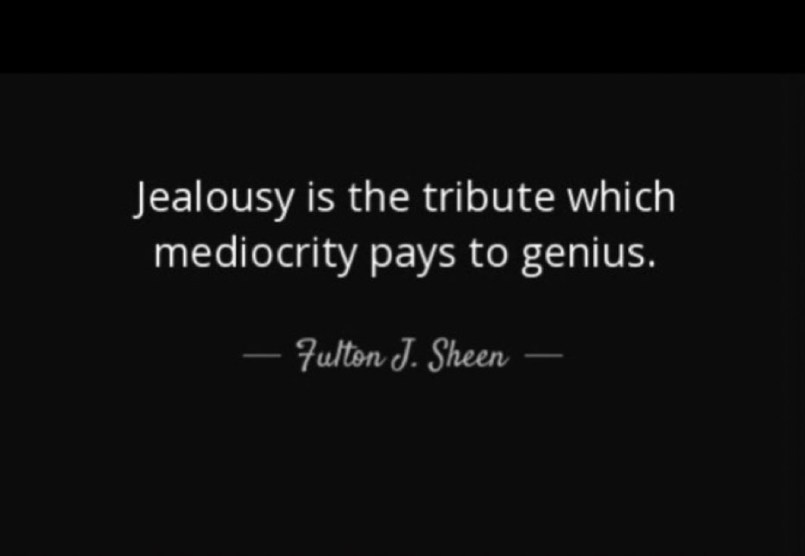
My point is perfectly clear: anyone who has repeatedly resorted to plagiarism and now attempts to justify it through this convoluted rhetoric truly knows nothing and has nothing of their own to say. The method they seek to dress up in erudite concepts is devastatingly simple: they take over another person’s text—its structure and substance—apply a few superficial alterations, distort the whole, and overlay it with their own intentions. Without that original text, the person following this pattern would quite simply have produced nothing. It is, therefore, unequivocally a fraud. What are we to make of these hazy justifications that summon intertextuality, transgression, and strangeness to defend the indefensible?
The arguments put forward to excuse plagiarism or counterfeiting are not merely unacceptable; they are lazy and intellectually dishonest—particularly when the borrowing involves a near-structural and substantial reproduction of an existing text, merely adorned with cosmetic additions that denature the original without creating anything genuinely new. The acrobatic deployment of literary concepts cannot withstand scrutiny when used to conceal what is plainly copying. Here is why:
1. Intertextuality: a legitimate tool, not an alibi
Intertextuality refers to the intrinsic interconnectedness between a text and other texts, enabling a work to engage in dialogue with the literary and cultural past through references, quotations, allusions, or parodies. It enriches meaning for the reader who perceives these connections, weaving a vast network of significations in which every text points toward others (as developed in the theoretical work of Julia Kristeva and Roland Barthes, among others).
It is a living dialogue: James Joyce converses with Homer’s Odyssey in Ulysses; T.S. Eliot constructs in The Waste Land a dense web of mythological and literary references. This creative practice openly acknowledges influences, transforms them, and generates something new—as Eliot himself explains in his 1923 essay “Ulysses, Order, and Myth,” where he theorizes Joyce’s “mythical method” as a way of imposing order on the chaos of modernity. 1
To claim, however, that intertextuality authorizes the wholesale adoption of the essential structure and content of a recent, personal, and non-canonical text—with only marginal modifications—is a gross abuse of language. To borrow another’s narrative skeleton and core ideas, then merely overlay a few words or minor variations, is not intertextual dialogue: it is lazy recycling.
Genuine intertextuality demands profound transformation that yields fresh value; it does not settle for superimposing a superficial layer onto the old. When the absence of the source text would render the borrower incapable of writing anything at all, that very fact confesses a parasitic dependence.
2. Literary transgression: freedom, yes—but not anarchy
Literary transgression (consider Sade, Bataille, or the Surrealists) seeks to shatter norms in order to explore forbidden territories, often with a critical or emancipatory aim. It embodies a form of “ultimate freedom” in writing, yet this freedom is invariably accompanied by creative responsibility. To transgress is to challenge through innovation, not through copying that one then attempts to disguise.
To assert that “transgression” legitimizes plagiarism is a complete misunderstanding. Where lies the real transgression when one merely appropriates another’s labour? Certainly not in the act of copying itself, which is the most banal and conformist gesture imaginable. The true transgression lies rather in the shameless denial of the debt. The “ultimate freedom” does not include the right to defraud another’s work. Under French law, counterfeiting precisely consists in substantial reproduction without authorization or sufficient transformation to constitute a legitimate derivative work. To invoke transgression as a cover for this is vicious rhetoric. It is as if a forger declared: “I transgress conventions in order to invent a new form of writing.” No—it is simply copying.
3. The strangeness of the other and literary friendship: a rather murky poetic misappropriation
Here we enter more philosophical territory, perhaps drawing loosely on Derrida or Levinas regarding alterity and the ethical encounter with “the strangeness of the other,” which might open onto a form of friendship or hospitality. Applied to literature, this would supposedly mean that appropriating the strangeness of a text (mine, for instance) could forge a friendly bond through intertextuality.
But let us be serious: this application is grotesque. To encounter the strangeness of the other presupposes respect and genuine dialogue—not a predatory appropriation that erases and distorts the original. When one “spreads one’s own intentions over it,” profoundly denaturing the source text, what results is not literary friendship: it is textual colonialism. Literary friendship implies reciprocity, not unilateral predation.
To link this to intertextuality in order to excuse counterfeiting is to twist demanding concepts in the service of masking a glaring lack of originality. This is what one does when attempting to conceal emptiness behind scholarly jargon, hoping the appearance of depth will deceive.
Stolen style, borrowed concepts
When someone repeatedly copies in this manner, it does not reveal a transgressive genius; it exposes a chronic inability to create anything new. To attempt to instrumentalize tools designed to enrich literary creation and use them as alibis for blatant plagiarism—founded on the structural and substantial reuse of a text without which nothing would have been written—is simply ridiculous.
Finally, to claim to “correct” the other’s existential error—that is, their audacity in claiming the freedom to write according to their own ambitions and to be recognized in their singularity—, to censor them in order to take their place and assert one’s own “great freedom,” betrays a pathological rivalry, even a dangerous over-identification that verges on delusional conviction.
The full text is available for free in PDF on several sites, for example here.
Hella Ahmed 2026 © All rights reserved – Find my books on Amazon